

By the FeetCare team · Last updated 18 November 2026
Quick answer: Custom insoles for soccer shoes are thin, low-volume orthotics made from a scan of your feet and shaped to fit inside your football boots. They are worth it if you get recurring heel, arch or ball-of-foot pain when you play, have flat feet or high arches, or have one foot that behaves differently from the other. If your feet are pain-free and you only want more comfort, a thin ready-made sports insole is usually enough. At FeetCare Singapore, custom-made insoles cost S$250–368 per pair for adults (S$180 for children) and are ready within 1–2 days.
Key takeaways
- Football boots are built for ball feel and speed. Most have thin sockliners with little arch support or cushioning.
- Cutting, turning and sprinting put the highest loads on the inner forefoot, arch and heel, and studs concentrate pressure under the ball of the foot.
- A good custom insole for soccer boots has to be thin, flexible at the toes, and designed for the specific boot you play in. A thick running orthotic will not fit.
- Custom insoles help with load and comfort. They will not prevent contact injuries such as ankle sprains from tackles.
- Always bring your boots to the fitting. The insole is only as good as its fit inside the boot.

Why are football boots hard on your feet?
Football boots are designed to keep your foot close to the ball and the ground. That means a narrow last, a thin sole and a sockliner that is often just a few millimetres of soft foam. A 2018 review of soccer footwear in Sports Medicine International Open noted that regular soccer outsoles do not include specific features for absorbing impact or supporting the arch, unlike running shoes.
The movements in football make this worse. A study of soccer players published in the British Journal of Sports Medicine measured pressure under the foot inside studded boots. Sideward cutting and 45° cutting produced significantly higher peak pressures than running under the second toe, inner forefoot, inner arch and inner heel. In other words, every time you change direction, the inside of your foot takes most of the load.
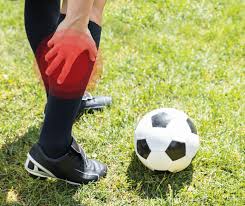
Studs add a third factor. Because the boot only contacts the ground through the studs, pressure concentrates beneath the metatarsal heads (the ball of the foot). A 2026 review in Sports Medicine – Open links this concentrated forefoot pressure with a higher risk of stress fractures of the second and fifth metatarsals, and describes the boot as a modifiable factor in non-contact lower-limb injury.
This is why players often feel fine in running shoes but get heel pain, arch fatigue, burning under the ball of the foot or tight calves after a game.
What does a custom insole actually do inside a soccer boot?
A custom insole changes how load is spread under your foot. In a football boot, a well-designed pair can:
- Support the arch during cutting and turning, which reduces the inward collapse that strains the arch, heel and Achilles in players with flat feet or overpronation.
- Spread forefoot pressure away from painful spots under the ball of the foot, the big toe joint or the outer edge of the foot.
- Hold the heel steady with a shallow heel cup, so the foot slides less inside the boot.
- Fill excess volume in boots that are slightly too roomy, which reduces friction and blisters.
- Correct left-right differences, such as one flatter foot or a small leg length difference, which a ready-made pair cannot do.
It is worth being clear about the limits. Insoles do not stop contact injuries. A long-term study of European professional clubs found lateral ankle sprains made up about half of all ankle injuries, and many were linked to tackles and foul play. A study of 30 professional soccer players also found that insoles and orthoses neither improved nor worsened balance in players without symptoms. The main benefits are comfort, load distribution and managing overuse pain, not making a healthy player more stable.
Custom vs ready-made insoles for football boots: which do you need?
Not every player needs custom insoles. Here is how we usually decide at FeetCare.
| Factor | Thin ready-made sports insole | Custom-made insole |
|---|---|---|
| Best for | Pain-free players who want more comfort and some arch support | Recurring pain, flat feet or high arches, uneven feet, previous foot injury |
| Shape | Standard arch profile, some can be heat-moulded | Built from a 3D scan of each foot |
| Fit in tight boots | Choose a thin model; trim to size | Thickness and length set for your specific boot |
| Left-right differences | Same on both sides | Each foot designed separately |
| Price at FeetCare | S$55–109 per pair | S$250–368 per pair (adults); S$180 (children) |
| Lifespan | Shorter; foam compresses with use | Up to 5 years with adjustments |
Choose custom if: you have pain that comes back every season, a ready-made insole has not helped, your two feet are noticeably different, or you are returning from a foot or ankle injury. Start with ready-made if: you have no pain, play casually once a week, or want to test whether added support helps. Thin options such as the SOLE Active Thin mouldable insole often fit boots that cannot take anything thicker. For a fuller comparison, see our guide to custom vs off-the-shelf insoles.
What makes a good custom insole for soccer shoes?
A custom insole that works in a running shoe can fail in a football boot. These are the design points that matter most for football:
- Low volume. Boots have very little internal space. The insole must replace the stock sockliner without lifting your heel out of the heel counter or squashing the toes.
- Flexibility at the toes. Players push off and strike the ball through the forefoot. A rigid insole under the toes feels wooden and blocks natural toe bend, so support should end behind the ball of the foot or taper to a flexible forefoot.
- Targeted forefoot offloading. Where the scan shows high pressure under a specific metatarsal, the big toe joint or the outer edge, the design can relieve that spot, for example with a metatarsal dome or a softer zone.
- A shallow, stable heel cup. Deep heel cups do not fit most boot heel counters. A shallow cup still controls heel movement without crowding the boot.
- A grippy, sweat-tolerant top cover. Singapore matches are hot and humid. The top layer needs to hold your foot in place when wet and dry out quickly.
- Durability under twisting. Football loads are multi-directional. The base and top cover must stay bonded through repeated cutting and turning.
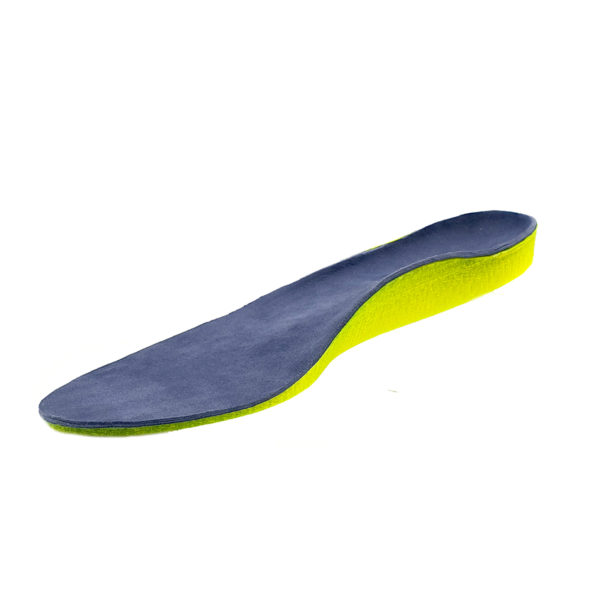
We explain our general design approach in more detail in How Do We Design a Good Pair of Custom Insoles?
Which football boots can take custom insoles?
Most can, as long as the stock insole is removable. Check this before your fitting by pulling the sockliner out from the heel. If it is glued in, it can usually be peeled out carefully, but ask us first.
| Boot type | Typical use in Singapore | Insole considerations |
|---|---|---|
| FG / SG (firm or soft ground) | Natural grass pitches | Fewer, longer studs mean more concentrated forefoot pressure. Forefoot offloading matters most here. |
| AG (artificial ground) | Most artificial turf pitches | More studs spread load better, but turf is firmer. Add a little cushioning at the heel and forefoot. |
| TF (turf trainers) | Futsal cages, cage football, training | Usually more internal room, so a slightly fuller insole can fit. |
| IC (indoor / futsal) | Indoor courts | Flat rubber sole and lots of sharp stops. Heel stability and grip on the top cover are the priorities. |
| Laceless / knit boots | All surfaces | Tight sock-like fit leaves almost no spare volume. These need the thinnest designs. |
If you play on more than one surface, bring every pair of boots you use regularly. One insole can sometimes work across similar boots, but a FG boot and a futsal shoe usually need different thickness.
How does FeetCare make custom insoles for soccer shoes?
Our custom insoles are designed and produced in-house in Singapore. The process for football players looks like this:
- Conversation and history. We ask where you play, how often, which position, which boots, and where it hurts. A winger making constant sprints and cuts needs something different from a goalkeeper.
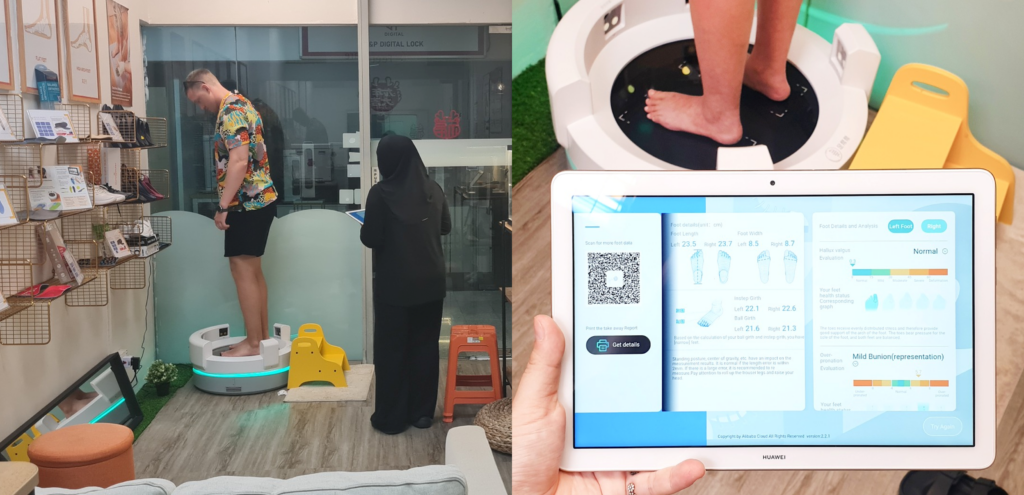
- 3D foot scan. We scan both feet to capture arch type, foot shape and how pressure is spread when you stand and move.
- Movement check. We look at how your feet behave while walking and moving, because feet often behave differently in motion than when standing still. Read more about foot gait analysis for custom insoles.
- Design for your boot. We set length, thickness, arch height, firmness and any forefoot offloading to suit both your feet and the boot you will wear them in.
- 3D printing and finishing. The insoles are printed and covered in-house, usually ready within 1–2 days.
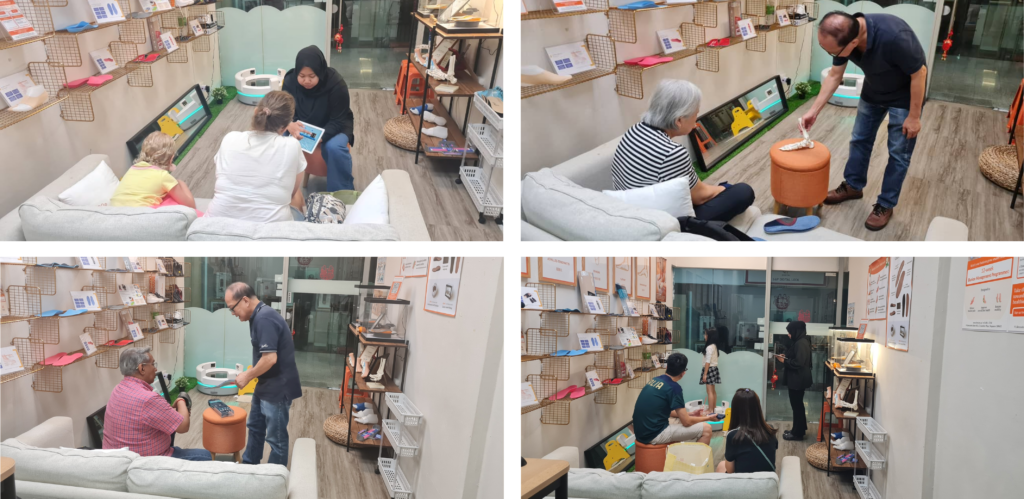
- Fitting in your boots. You try them in your own boots in store. We adjust until the fit and feel are right.
- Review and adjustments. We review your insoles at 3–6 months. Adjustments are unlimited, and you can read our warranty and adjustments policy for details.
How much do custom insoles for football boots cost in Singapore?
At FeetCare, prices for insoles suitable for football are:
- Ready-made, fitted in store: S$55–109 per pair, available immediately
- Custom-made for children: S$180 per pair, ready within 1–2 days
- Custom-made for adults: S$250–368 per pair, ready within 1–2 days
Custom pairs include a free consultation, custom length, width and thickness, adjustable firmness, unlimited adjustments, and last up to 5 years. See our insoles page for the full breakdown.
Which football foot problems can custom insoles help with?
Custom insoles are commonly used by players with:
- Heel pain and plantar fasciitis after matches or first thing in the morning. See insoles for plantar fasciitis.
- Flat feet or overpronation, where the arch collapses during cuts. See insoles for flat feet.
- High arches, which concentrate pressure on the heel and ball of the foot. See high arch insoles.
- Ball-of-foot pain, including sesamoiditis, Morton’s neuroma and big toe joint pain.
- Achilles pain. See our Achilles tendonitis guide.
- Heel pain in young players, such as Sever’s disease. See insoles for children playing football.
When to see a doctor or podiatrist first: pinpoint bone pain on the top or outer edge of the foot (a possible stress fracture), significant swelling, numbness, or pain that stops you walking. Insoles can be part of recovery, but these need a diagnosis first. If you are unsure, read Do I need to see a podiatrist for custom insoles?
Tips for using custom insoles in football boots
- Break them in at training, not on match day. Wear them for a few short sessions first so your feet can adapt.
- Remove the stock sockliner. Custom insoles replace it. Stacking both makes the boot too tight.
- Air-dry after every session. Take the insoles out of the boots so both dry properly.
- Keep them away from heat. Do not leave boots and insoles in a car boot or in direct sun. Excessive heat can deform insoles.
- Manage friction. If you get blisters, thin toe socks under football socks or gel heel grips can help.
- Come back if something changes. New boots, a new injury or new discomfort are all reasons to have the insoles checked and adjusted.
For general advice on choosing any insole for football, including ready-made options, see our guide to insoles for soccer boots.
Frequently asked questions
Will custom insoles make my football boots too tight?
They should not, if they are designed for the boot. Custom insoles replace the stock sockliner, and the thickness is set for the boot’s internal volume. Very tight laceless or knit boots need the slimmest designs, which is why we ask you to bring your boots to the fitting.
Can I use the same custom insoles in my football boots and running shoes?
Usually not. Running shoes have much more internal space and a different shape, so an insole designed for running is normally too thick for boots. Many players have a separate pair designed for their boots.
How long do custom insoles last in football boots?
FeetCare custom insoles last up to 5 years. Football is harder on insoles than everyday walking because of sweat, twisting and studs, so we check their condition at your 3–6 month review and adjust or refurbish them as needed.
Can custom insoles prevent ankle sprains?
Not reliably. Many ankle sprains in football come from tackles and player contact, which insoles cannot change. Insoles are most useful for overuse problems such as heel pain, arch strain and ball-of-foot pain.
Are custom insoles suitable for children who play football?
Yes, especially for children with flat feet or heel pain during growth spurts. Children’s custom insoles at FeetCare cost S$180 per pair. Because children’s feet grow quickly, they need to be checked and replaced more often. See our children’s insoles page.
How quickly can I get custom insoles before a tournament?
Custom insoles at FeetCare are usually ready within 1–2 days. Allow at least a week of training in them before an important match.
Do I need to see a podiatrist to get custom insoles for football?
Not for common problems such as arch fatigue, flat feet or heel discomfort. A podiatrist or doctor is the right first stop if you suspect a fracture, have diabetes-related foot problems, or have pain that needs a medical diagnosis.
Get custom insoles fitted for your football boots
FeetCare has been fitting insoles in Singapore for over 10 years and is the official insoles partner for the Singapore National Team. Bring your boots and we will assess your feet, scan them, and recommend whether a ready-made or custom insole suits you.
- Sunshine Plaza: 91 Bencoolen Street #01-27, Singapore 189652. Walk-ins and appointments. 2 minutes from Bencoolen MRT (DT21).
- East Village: 430 Upper Changi Road #01-56, Singapore 487048. By appointment only. 9 minutes from Tanah Merah MRT.
- Opening hours: Mon–Fri 10:30am–7:30pm; Sat–Sun 10:00am–8:00pm
- Call or WhatsApp: +65 8811 7258
Not in Singapore? Try our online foot assessment to get a ready-made insole recommendation.
References
- Wong P, Chamari K, Mao DW, Wisløff U, Hong Y. Higher plantar pressure on the medial side in four soccer-related movements. British Journal of Sports Medicine, 2007.
- Critical review of soccer footwear characteristics and soccer-specific injuries. Sports Medicine International Open, 2018; 2(2): E52–E61.
- Review of football boot design as a modifiable determinant of non-contact lower-limb injury. Sports Medicine – Open, 2026.
- Waldén M, Hägglund M, Ekstrand J. Time-trends and circumstances surrounding ankle injuries in men’s professional football. British Journal of Sports Medicine, 2013.
- Percy ML, Menz HB. Effects of prefabricated foot orthoses and soft insoles on postural stability in professional soccer players. Journal of the American Podiatric Medical Association.
- Okholm Kryger K et al. Can subjective comfort be used as a measure of plantar pressure in football boots? Journal of Sports Sciences, 2017.