

Does Bunion Corrector Really Work? What You Need to Know
Bunion correctors can help relieve pressure, reduce friction and improve comfort around a bunion, but they generally cannot permanently correct the underlying bone deformity or reverse an established bunion. For people in Singapore who spend long hours standing, walking or wearing enclosed work shoes, the right combination of suitable footwear, bunion protection and supportive insoles may help manage discomfort more effectively than relying on a corrector alone.
FeetCare Singapore offers bunion correctors and supportive insoles to help people find practical options for everyday foot comfort. The best choice depends on your bunion’s severity, symptoms, footwear and daily activities.
If bunion discomfort is affecting your work or daily walking, you can also book an appointment with FeetCare to explore suitable foot-care options.
Quick Answer: Do Bunion Correctors Really Work?
Yes, bunion correctors can help with comfort and symptom management, but their effectiveness depends on the design and the individual. Toe spacers may reduce pressure between the toes, while protective pads can reduce rubbing against shoes. Splints and night braces may temporarily position the toe differently, but there is limited evidence that they permanently change the structure of an established bunion.
Best For: Who Can Benefit from a Bunion Corrector?
Bunion correctors may suit people experiencing mild discomfort, toe friction or pressure from footwear. They can be particularly useful for people who walk frequently, stand for long periods or want additional protection inside suitable shoes. They are not a guaranteed solution for severe deformities or persistent pain.
How Do Bunion Correctors Work?
A bunion, medically known as hallux valgus, develops when the big toe angles towards the smaller toes and the joint at its base becomes prominent. It can cause redness, swelling, tenderness and difficulty finding comfortable shoes.
Bunion correctors work by managing pressure, friction or toe positioning. Different designs serve different purposes.

1. Toe spacers
These fit between the big toe and second toe to reduce contact and may provide temporary comfort. They are generally more suitable for short periods of use when they fit comfortably.

2. Bunion pads and protectors
These cushion the bony prominence and reduce rubbing against footwear. They can be useful for people wearing work shoes or walking extensively, provided the pad does not make the shoe tighter.
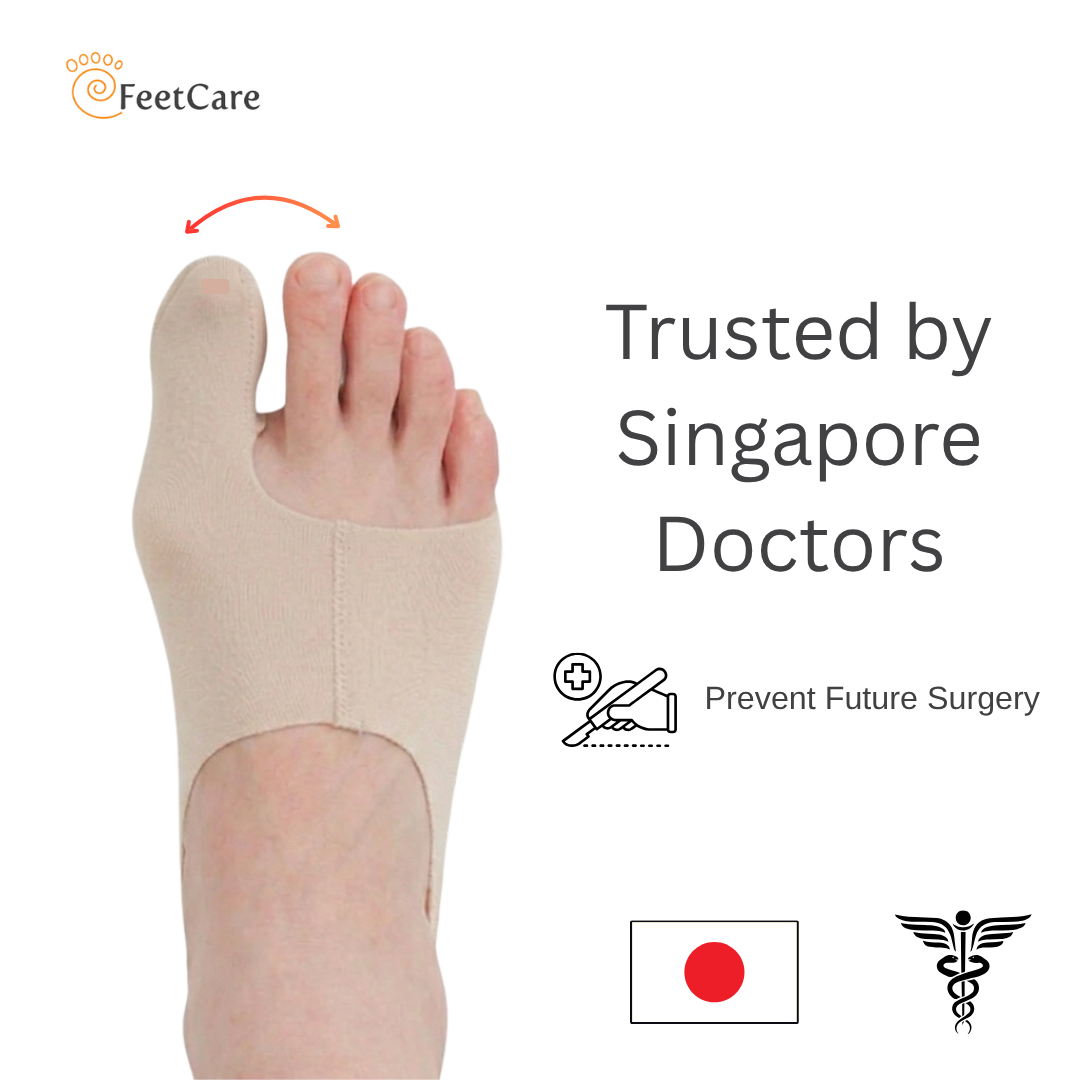
3. Bunion splints and night braces
These apply gentle pressure to position the big toe differently. They may offer temporary relief for some people, but there is no strong evidence that they permanently straighten an established bunion.
The key distinction is that reducing discomfort is not the same as correcting the bunion itself. Singapore General Hospital’s AHPedia explains that bunion splints, toe separators and night splints do not permanently straighten bunions.
When to Choose This: Which Bunion Corrector Is Best?
The right product depends on where you feel discomfort, how much space your shoes provide and whether you need support during activity or protection at rest.
| Your situation | Option to consider | Important consideration |
|---|---|---|
| Rubbing against shoes | Silicone bunion pad | Check that it does not increase pressure |
| Toes pressing against each other | Soft toe spacer | Avoid forcing a stiff or painful toe into position |
| Discomfort when resting | Comfortable bunion splint | Stop if pain or skin irritation develops |
| Long hours standing at work | Roomy work shoes and suitable insoles | Ensure safety shoes still fit correctly |
| Walking or running regularly | Well-fitting activity shoes and, if appropriate, orthotic insoles | Test comfort gradually before longer sessions |
| Persistent pain or worsening deformity | Assessment by a doctor or podiatrist | A corrector alone may not address the underlying problem |
Do Insoles Help with Bunions?
Insoles may help some people with bunions by improving comfort and redistributing pressure within the shoe. However, they do not reverse the bone deformity, and results vary depending on foot structure, footwear and the cause of pain.
For people who spend much of the day on their feet, the distinction between cushioning and support matters.
- Cushioning insoles help soften the impact of walking on hard floors.
- Arch-support insoles may help manage certain foot mechanics that contribute to discomfort.
- Custom insoles may be worth considering when standard options do not fit well or when an individual assessment identifies a specific need.
Explore FeetCare’s insole range to compare options for different shoes and daily activities.
How Does Singapore’s Climate and Lifestyle Affect Your Choice?
Singapore’s hot, humid weather can make moisture management and skin comfort important when using toe spacers, pads or enclosed footwear. Sweat, friction and a poorly fitting device can contribute to irritation.
Consider these practical situations:
- Nurses and healthcare workers: Choose options that fit securely inside work shoes without creating pressure points during long shifts.
- Retail, F&B and security staff: Prioritise comfortable footwear and suitable cushioning for prolonged standing and walking.
- Office workers: Check whether formal shoes have enough room around the big toe joint.
- Runners and marathon trainees: Test any new device during a short, easy session before relying on it for longer distances.
- Seniors: Prioritise stable, well-fitting footwear and avoid devices that interfere with balance or walking.
For school shoes, sandals and safety shoes, check the available space carefully. A thick bunion pad or bulky spacer can make an already tight shoe less comfortable.
When to See a Specialist
See a doctor or podiatrist if your bunion pain persists for several weeks despite changes to footwear, interferes with normal activities or appears to be worsening. Seek prompt medical assessment if the joint becomes suddenly very painful, hot or markedly swollen, particularly if you are unsure whether the problem is actually a bunion.
People with diabetes, reduced sensation or circulation problems should seek professional advice before using pressure-producing devices, as skin damage may go unnoticed.
Surgery may be considered when pain substantially affects daily life and non-surgical measures have not provided sufficient relief. It is the treatment that can correct the structural deformity; a bunion corrector is not a substitute for a medical assessment.
FeetCare Recommendation: How Should You Manage a Bunion?
For most people, a sensible starting point is to reduce pressure on the bunion, improve shoe fit and choose a corrector only if it addresses a specific comfort problem.
FeetCare recommends considering the following approach:
- Start with footwear. Choose shoes with a wide, deep toe box so the big toe joint is not compressed.
- Choose the right bunion corrector. A soft protector may be more practical for shoe friction, while a toe spacer may suit mild toe-to-toe pressure.
- Consider insoles when appropriate. If you also experience arch discomfort, flat feet or general foot fatigue, suitable insoles may help address additional sources of discomfort.
- Monitor your response. A device should feel comfortable rather than force your toe into position. Stop using it if pain, numbness, redness or skin irritation develops.
These are general foot-care suggestions, not a diagnosis or personalised medical treatment plan.
FeetCare offers options for different everyday footwear and comfort needs. You can browse the bunion corrector collection or book an appointment to discuss suitable options.
Frequently Asked Questions
1. Can a bunion corrector straighten my big toe permanently?
Generally, no. A corrector may temporarily change toe positioning or reduce discomfort, but it cannot reliably reverse the structural bone changes that cause a bunion.
2. How long should I wear a bunion corrector each day?
There is no single recommended duration for every device. Follow the manufacturer’s instructions, begin cautiously and check your skin regularly. Do not continue wearing a device that causes pain, numbness or irritation.
3. Are bunion correctors effective for mild bunions?
They may help manage friction or discomfort in mild cases, particularly when combined with suitable footwear. However, a mild bunion is not guaranteed to improve structurally with a corrector.
4. Do bunion correctors work while sleeping?
Night splints may temporarily hold the toe in a different position and may relieve symptoms for some people. Evidence does not establish that wearing one overnight permanently corrects a bunion.
5. Are custom insoles better than ready-made insoles for bunions?
Not necessarily. Ready-made insoles may be sufficient for some people, while custom insoles may be considered when foot mechanics, footwear requirements or persistent symptoms call for a more individualised approach. Neither type permanently corrects a bunion.
6. What type of insoles are best for bunions?
It depends on your symptoms. Cushioning may improve comfort on hard floors, while arch support may help when additional foot support is appropriate. The insole must fit without squeezing the forefoot or increasing pressure on the bunion.
7. Can I wear a bunion corrector inside safety shoes?
Possibly, provided the device fits comfortably without making the shoes tighter or interfering with their protective fit. Workers should not modify safety footwear in ways that compromise its intended protection.
8. Can I wear a bunion corrector with sandals?
Some low-profile toe spacers or protective pads may be compatible with certain sandals, but fit varies. Avoid devices that slip, create friction or affect walking stability.
9. Will walking or running make my bunion worse?
Activities that repeatedly aggravate the joint may increase discomfort, especially in tight footwear. You do not necessarily need to stop exercising, but consider comfortable shoes, appropriate activity adjustments and professional advice if symptoms persist.
10. How do I know whether I need a doctor or a bunion corrector?
A corrector may be reasonable for mild friction or pressure when the diagnosis is clear. Consult a doctor if pain persists, the deformity progresses, walking becomes difficult or the joint is suddenly hot and swollen.
11. Can bunions be treated without surgery?
Yes, symptoms can often be managed with suitable footwear, protective pads, activity adjustments and selected orthotic devices. These approaches may improve comfort but cannot guarantee that the bunion will stop progressing.
12. Where can I buy bunion correctors in Singapore?
FeetCare Singapore provides an online bunion corrector collection for people comparing options for everyday foot comfort. Check individual product details and suitability for your footwear before purchasing.
Internal Links: Explore FeetCare Solutions
- Bunion Correctors — Browse options designed to help manage bunion-related pressure and friction.
- Orthotic Insoles — Explore cushioning and support options for different footwear and activities.
- Book an Appointment — Find out about appointment options for discussing your foot-care needs.
External Authority Links
The following credible medical resources provide additional information about bunions, conservative treatment and the limitations of corrective devices.
- Singapore General Hospital — Can bunion splints, toe separators and night splints straighten bunions? — Explains why these devices do not permanently correct bunions.
- SingHealth — Bunion (Hallux Valgus): Symptoms and Treatment — Covers bunion symptoms, footwear and medical treatment.
- American Academy of Orthopaedic Surgeons — Bunions — Discusses non-surgical management, orthotics and surgical options.
- NHS — Bunions — Offers practical self-care guidance and advice on when to seek medical attention.