

At FeetCare we hear the same handful of beliefs about insoles almost every week. A customer with heel pain waits a year before trying insoles because a friend told them insoles “make your feet lazy.” Another buys the squishiest gel pair on the shelf and wonders why their arches still ache by lunchtime. A runner keeps the same pair for three years because they still look fine.
Most of these beliefs come from half-truths. Some started as good advice that got stretched too far. Others are marketing claims that stuck. Either way, they cost people time, money and comfort.
We’ve been fitting insoles in Singapore for more than ten years, and we’d rather you make a good decision than an expensive one. So here are the eight myths we hear most, what the research actually says, and what that means for your feet.
The short version
| Myth | The reality |
|---|---|
| Insoles weaken your feet | Studies have not found that supportive insoles shrink or weaken foot muscles |
| Custom insoles are always better | For common problems like heel pain, well-chosen ready-made insoles often work as well as custom |
| Softer is better | Cushioning feels nice, but structured support is what research links to fewer injuries |
| Insoles are only for flat feet | High arches, heel pain, long standing hours and sport can all benefit |
| Insoles permanently fix flat feet | Insoles support the foot while you wear them; they don’t reshape it |
| A good pair lasts forever | Materials compress over time even when the insole looks fine |
| If it hurts, it’s working | Mild awareness while adjusting is normal; pain is a sign the fit is wrong |
| Insoles alone will fix your pain | Insoles work best as one part of a plan that includes footwear, load and stretching |
The myths, one by one
Myth 1: “Insoles will make your feet weak and lazy”
This is the one we hear most, and it sounds logical. If something supports your arch, surely the muscles stop working?
The research doesn’t back it up. A University of Salford study had people wear foot orthoses for three months, then measured the thickness and cross-sectional area of their intrinsic foot muscles. It found no change, and the researcher noted this challenges the idea that orthoses make muscles smaller and weaker.
What insoles do is change which muscles work hardest and when. A systematic review in Prosthetics and Orthotics International found some evidence that orthoses reduce the workload on tibialis posterior, a muscle that is often overworked in people with collapsing arches. That’s the point of wearing them.
What this means for you: Wearing insoles won’t undo your foot strength. If you want stronger feet, add simple foot exercises and some barefoot time at home. The two work together.
Myth 2: “Custom insoles are always better than off-the-shelf”
It’s natural to assume something made for your exact foot must beat something off a shelf. For many common problems, the evidence says otherwise.
A 2018 meta-analysis in the British Journal of Sports Medicine looked at people with plantar heel pain. Customised and prefabricated orthoses showed no difference at any time point. A review by Canada’s health technology agency reached the same conclusion over 6 weeks, 12 weeks and 12 months.
That doesn’t mean custom insoles have no place. We recommend them when a foot is unusual in shape, when the left and right feet differ a lot, or when a good ready-made insole hasn’t helped. In those cases, our in-store 3D foot scan lets us build support that a mass-produced shape can’t match.
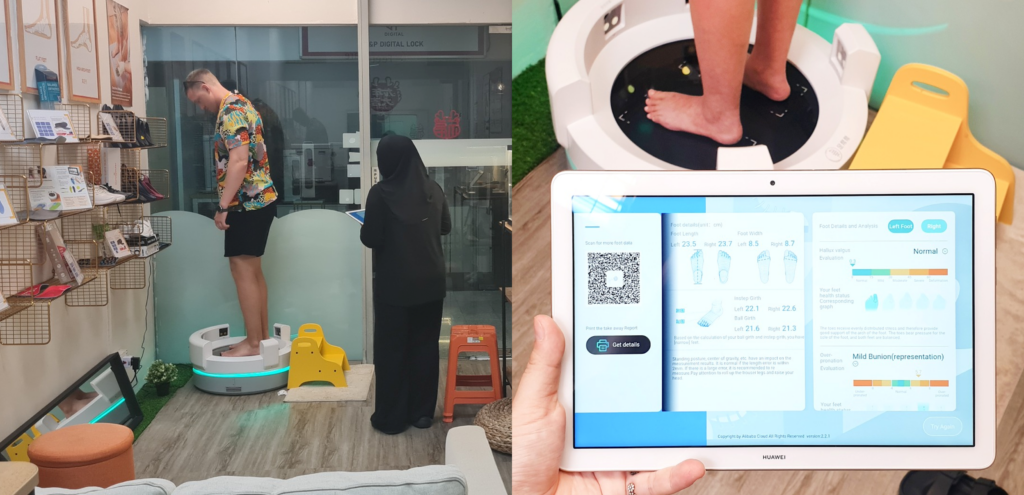
What this means for you: The right insole matters more than the most expensive one. A proper fitting tells you which you need. For most people, a well-chosen ready-made insole is the sensible place to start.
Myth 3: “The softer and squishier, the better”
Memory foam and gel insoles feel lovely in the shop. That first-step comfort is real, but it’s not the same as support.
A meta-analysis led by La Trobe University compared two types of insert. Foot orthoses, which have a structured shape, reduced overall injuries and stress fractures. Shock-absorbing insoles, which mainly add cushioning, did not prevent any type of injury.
Soft materials also flatten faster. The comfort you feel in week one can disappear within months.
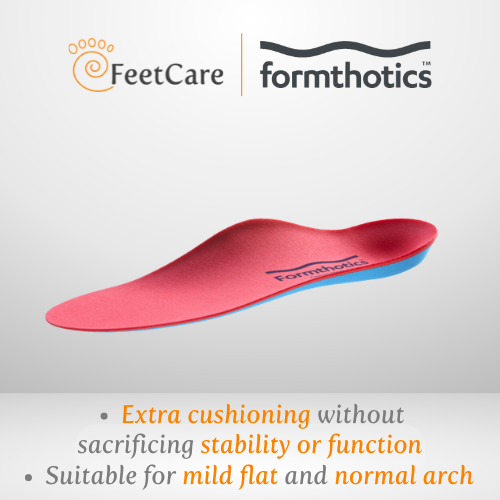
What this means for you: Look for an insole that holds its shape when you press the arch with your thumb. Some cushioning on top is fine. A soft insole with no structure underneath is mostly a comfort pad.
Myth 4: “Insoles are only for people with flat feet”
Flat feet get the attention, but plenty of other feet do well with the right insole.
People with high arches often have the opposite problem: too little contact area, so pressure piles onto the heel and the ball of the foot. Many of our customers have normal-looking arches but stand for 8 to 12 hours a day on hard floors, in retail, healthcare, F&B or warehouses. Runners and weekend sports players use them to manage training load.
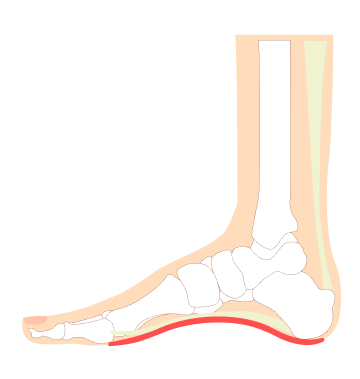
What this means for you: Don’t judge by your arch alone. If your feet, heels, knees or lower back ache after a long day on your feet, it’s worth getting assessed.
Myth 5: “Insoles will permanently fix flat feet”
This is the flip side of Myth 1, and it’s just as wrong. Insoles support your foot while you’re wearing them. They don’t remould bones.
This matters most for parents. Most young children have flat-looking feet, and that’s usually a normal stage of development. An evidence review in The Journal of Family Practice found that treating flexible flat feet with orthotics doesn’t change how the arch develops, and that most children with painless flexible flat feet need no treatment at all.
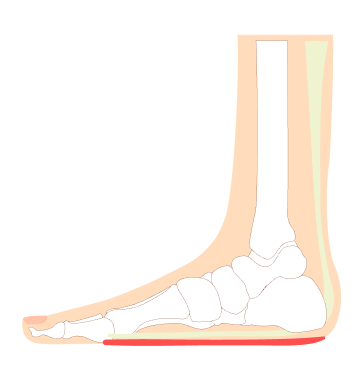
What this means for you: Flat feet that don’t hurt usually don’t need fixing. Insoles are for managing symptoms like pain and fatigue, not for changing the shape of your foot. If your child has flat feet and complains of pain, tires quickly or walks unusually, have them checked by a professional.
Myth 6: “A good pair of insoles lasts forever”
Insoles wear out from the inside. The top cover can look perfect while the foam underneath has lost its rebound and the arch has sunk a few millimetres.
How fast depends on the material, your body weight, how many hours you wear them and what you do in them. Runners and people who stand all day wear through insoles faster than office workers. Singapore’s heat and humidity don’t help either: sweat breaks down some foams and glues faster.
What this means for you: Check your insoles every few months. Replace them if the arch flattens easily under your thumb, the heel area is visibly compressed, the cover is peeling, or the aches you bought them for start coming back.
Myth 7: “If they hurt, they’re working”
New insoles change how your foot meets the ground, so it’s normal to feel some awareness for the first week or two. Your arches might feel “noticed.” Your legs might feel slightly tired.
Pain is different. Sharp pain, blisters, numbness, or new pain in your knees or hips are signs that the insole is the wrong shape, the wrong size or the wrong fit for that shoe.
What this means for you: Build up wear time gradually over the first one to two weeks, starting with a couple of hours a day. If something hurts, stop and get the fit checked. Don’t tough it out.
Myth 8: “Insoles alone will fix my foot pain”
Insoles help, and the evidence for some uses is solid. But they work best as one part of a plan, not as a cure on their own.
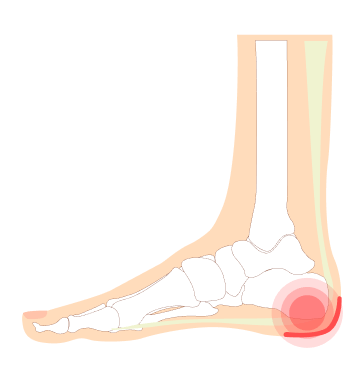
The 2018 BJSM heel pain review found moderate-quality evidence that orthoses reduced pain more than sham insoles over the medium term, though the authors were unsure how large the real-world benefit was. That’s a useful effect, not a miracle.
The people who do best usually combine insoles with the right shoes, calf and foot stretches, and sensible changes to how long they’re on their feet or how much they’re training.
What this means for you: Think of insoles as a tool that makes the rest of your recovery easier. If pain is severe or isn’t improving after several weeks, see a doctor or podiatrist.
So, do you actually need insoles?
Insoles are worth a try if any of these sound familiar:
- Heel pain, especially with your first steps in the morning
- Arches, feet or calves that ache after a long day standing or walking
- Knee or lower back discomfort that gets worse the longer you’re on your feet
- Shoes that wear down unevenly on one side
- Training for a run or sport and wanting to manage load on your feet
Insoles are not the answer on their own, and you should see a doctor first, if you have:
- Sudden or severe pain, swelling or bruising after an injury
- Numbness, tingling or burning in your feet
- Diabetes and any foot pain, wound or change in sensation
- A foot that has changed shape, or pain that wakes you at night
If you’re not sure where you fall, start with our free online foot assessment or book an in-store fitting. We’ll tell you honestly whether insoles are likely to help, and which type.
Frequently asked questions
Do insoles weaken your feet? There’s no good evidence that they do. A three-month study found no change in the size of foot muscles in people wearing orthoses. Insoles shift some workload between muscles; they don’t switch them off.
Are custom insoles better than off-the-shelf insoles? Not automatically. For common problems such as plantar heel pain, studies have found similar results from custom and well-chosen prefabricated insoles. Custom insoles make most sense for unusually shaped feet, large differences between feet, or when ready-made insoles haven’t helped.
How often should I replace my insoles? It depends on the material and how hard you use them. Check them every few months and replace them when the arch flattens easily, the heel is compressed or your old symptoms return. Runners and people who stand all day will need to replace them sooner.
Is it normal for new insoles to feel uncomfortable? Mild awareness for the first week or two is normal. Increase wear time gradually. Sharp pain, blisters or numbness are not normal and mean the fit should be checked.
Can insoles fix flat feet? No. Insoles support the foot while you wear them but don’t change its structure. Flat feet that cause no pain usually need no treatment.
Can I move my insoles between different shoes? Often, yes, as long as the shoe has a removable footbed and enough depth. Insoles that fit well in trainers may be too bulky for dress shoes or slim work shoes, so ask about a slimmer option if you need one.
Get the right insole, not just any insole
The biggest mistake we see isn’t choosing the wrong brand. It’s buying an insole without knowing what your feet need.
At FeetCare, we fit ready-made insoles from Formthotics, SOLE Active and Archline, and make custom insoles from a 3D scan of your feet. Because we carry both, we have no reason to push you towards the pricier option. We’ll recommend the one that suits your feet, your shoes and your day.
[Book a fitting at Sunshine Plaza or East Village] · [Try the online foot assessment] · [Read our Insoles Purchase Guide]